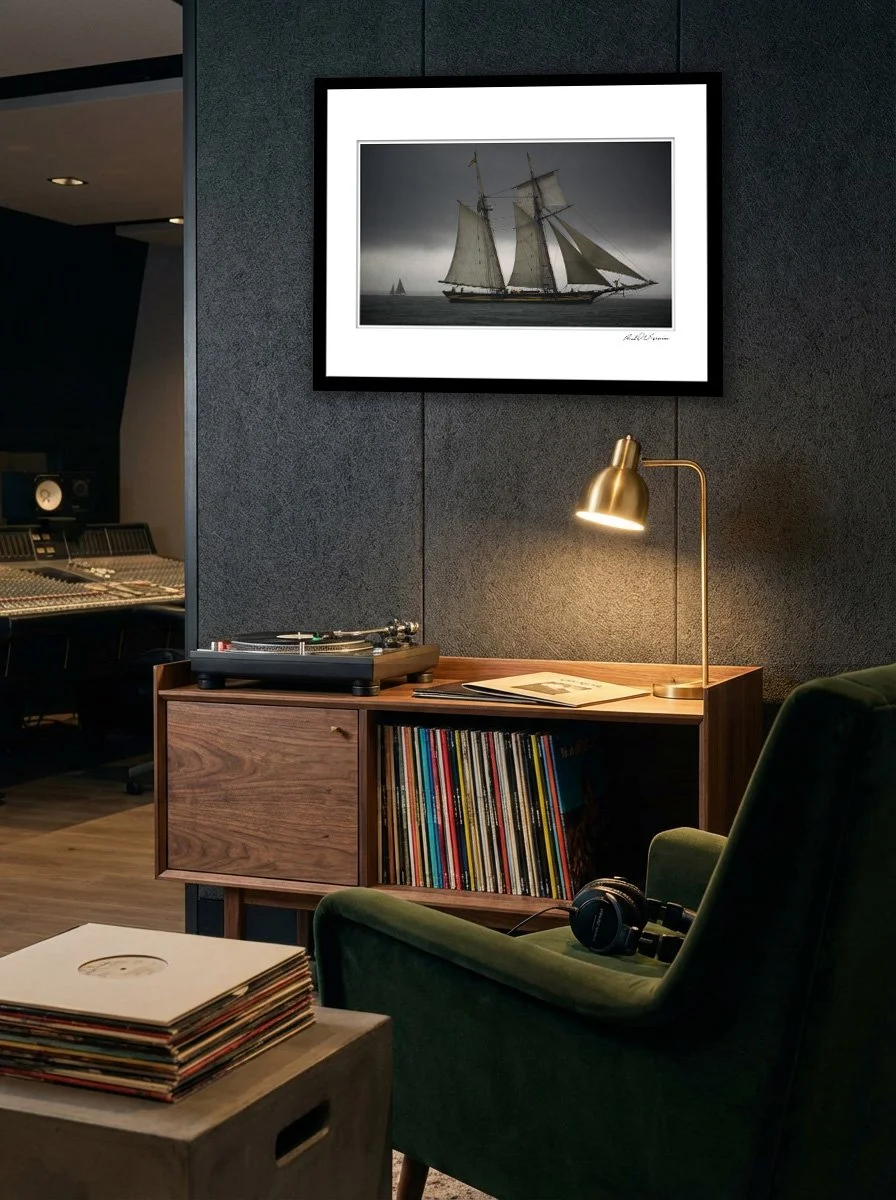
Fifty years behind the lens, the score, and the page.
Today, more producers and designers are working in multiple medium including photography, music, video and print. These programs end up saved in different applications that cannot see each other. MediaVault exists to solve that problem. It's one library, seven disciplines, organized around projects and themes rather than photo shoots or dates.
MediaVault was born out of the frustration of Richard Olsenius, facing a challenge to organizing his lifetime of work. Olsenius began photographing street life in Greenwich Village with a Konica 35mm while working as a copy aide at Time Life in New York. He returned to Minnesota to study journalism at the University. By 1970 he had a one-man show, "High School", at the Minneapolis Institute of Arts, a look at the effects of white flight on urban schools.
That same year he was hired as a staff photographer at the Minneapolis Tribune. Over a decade at the Triune, he covered everything from local high school football to the genocide of Cambodians under Pol Pot, coverage that earned him the 1980 World Press Photo Award.
In 1985, Olsenius began a long collaboration with National Geographic that would produce eight feature stories and contributions to sixteen books and Traveler articles — three of which he also wrote himself, including the National Geographic Field Guide for Digital Black and White Photography. From 1995 to 1999 he served as a full-time photo editor for the magazine and served as lead producer for the Magazine's first website.
Throughout his career, Olsenius has treated music as inseparable from the image, producing multimedia book-and-CD projects like Distant Shores and Arctic Odyssey, that paired his photography with his own compositions. Along the way Richard produced two award-winning films broadcast on PBS stations.
Olsenius continues to photograph, film, and compose today — and MediaVault is a direct answer to a problem fifty years in the making - how do you find any one piece of work again, across every format it was ever made in? The answer is MediaVault.
His body of work is available at AmericanLandScapeGallery.com.